Slug:jewelry-care-guide
Meta Description:
Learn simple jewelry care tips for sterling silver, gold-plated jewelry, necklaces, earrings, rings and bracelets.
Excerpt:
A few simple habits can make a major difference in how your jewelry looks over time. Learn how to wear, clean and store your favorite pieces.
Jewelry Care Guide: Simple Ways to Keep Your Jewelry Looking Beautiful
Jewelry is exposed to more than most people realize.
Everyday pieces regularly come into contact with skincare, perfume, sweat, water, air and clothing.
Good jewelry care does not need to be complicated. A few consistent habits can help preserve the appearance of your favorite necklaces, earrings, bracelets and rings.
Put Jewelry On Last
A simple rule is:
get ready first, put jewelry on last.
Apply lotion, perfume, sunscreen, makeup and hair products before putting on jewelry.
Allow products to dry before wearing your pieces.
This reduces direct contact between jewelry and chemicals, oils and moisture.
Remove Jewelry Before Showering or Swimming
Water itself is only part of the issue.
Swimming pools contain chlorine, while ocean water contains salt and minerals. Shower products may contain ingredients that leave residue on metal surfaces.
For best long-term care, remove jewelry before:
showering, swimming, exercising and cleaning.
Wipe Jewelry After Wearing
A soft jewelry cloth can remove oils and residue before they accumulate.
You do not need to aggressively polish jewelry every day.
A gentle wipe after wearing is often enough for routine maintenance.
Pay particular attention to pieces that sit directly against the skin, such as necklaces and rings.
How to Clean Sterling Silver
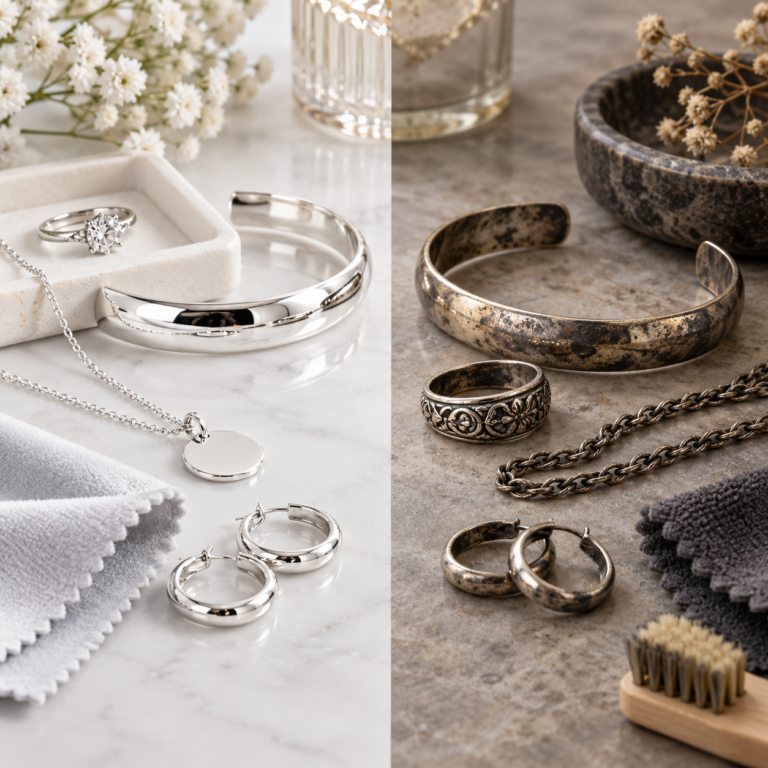
Sterling silver can naturally tarnish.
For light tarnish, gently use a soft silver polishing cloth.
For basic cleaning, mild soap and lukewarm water may be suitable for simple silver pieces.
Dry the jewelry completely afterward.
Avoid aggressive polishing if the piece has special finishes, plating or delicate stones.
How to Care for Gold-Plated Jewelry
Gold-plated jewelry requires gentler treatment because the gold-colored layer is applied over another material.
Avoid abrasive polishing compounds.
Try to minimize contact with:
chlorine, perfume, lotions, cleaning products and prolonged moisture.
After wearing, gently wipe the jewelry and store it dry.
Caring for Gemstone Jewelry
Gemstones vary significantly in hardness and sensitivity.
A cleaning method that is safe for one stone may not be appropriate for another.
When in doubt, use a soft dry cloth and avoid harsh chemicals, ultrasonic cleaning and excessive soaking.
Always follow product-specific care guidance.
Store Jewelry Separately
One of the most common causes of scratches is jewelry rubbing against other jewelry.
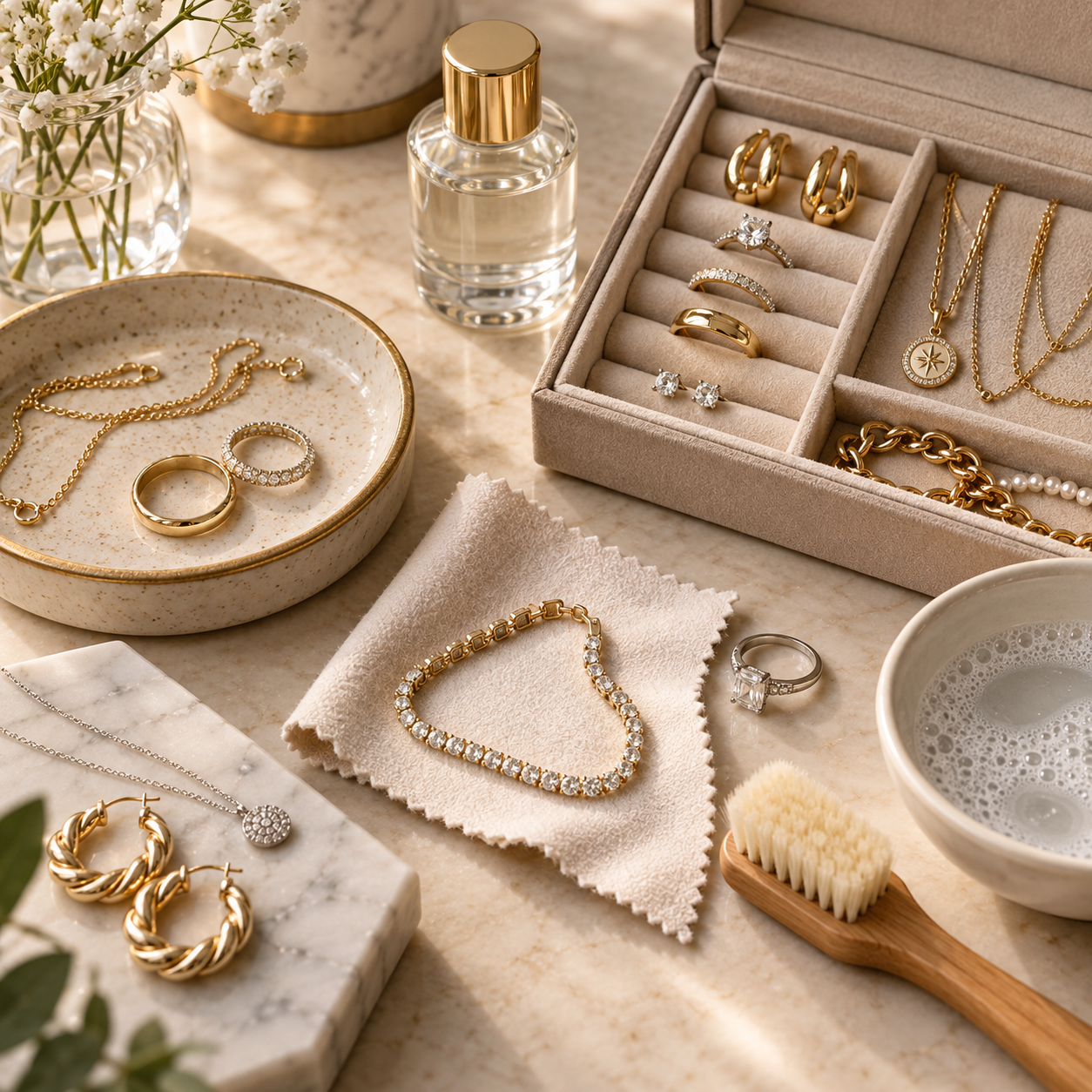
Store pieces individually or use a box with divided compartments.
Soft pouches are particularly helpful when traveling.
Keep necklaces clasped and either laid flat or hanging straight to reduce tangling.
Keep Jewelry Away From Humidity
Bathrooms may be convenient places to leave jewelry, but they are often humid.
Moisture can accelerate tarnishing and affect certain finishes.
A dry bedroom drawer, closed jewelry box or dedicated organizer is usually a better choice.
How to Store Necklaces
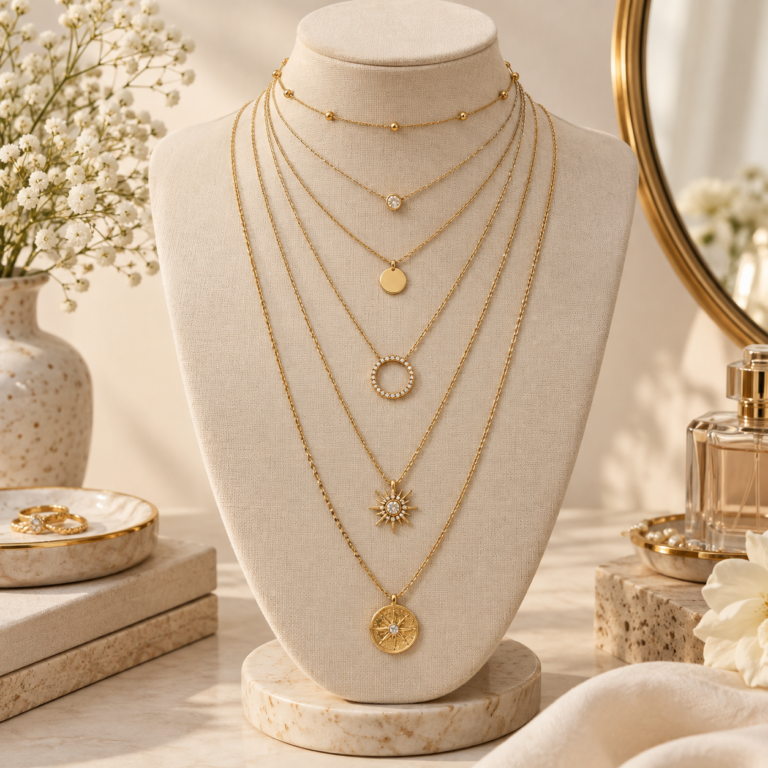
Fasten the clasp before storing.
This helps prevent the chain from twisting around itself.
If possible, hang necklaces separately or lay them flat.
For delicate chains, individual compartments can greatly reduce knots.
How to Store Earrings
Keep pairs together.
For stud earrings, use an earring card or dedicated holder so backs do not become lost.
Larger earrings should have enough room so stones and metal surfaces are not constantly rubbing against neighboring pieces.
How to Store Rings
Rings can easily scratch each other when placed together in a dish.
A lined ring slot or individual compartment provides better protection.
Pieces with raised stones should be stored carefully to avoid catching on other jewelry.
When Should You Stop Wearing a Piece?
Inspect jewelry periodically.
If a clasp becomes loose, a prong appears damaged or a stone moves, stop wearing the piece until it can be inspected.
Continuing to wear damaged jewelry can turn a minor issue into a lost stone or broken chain.
Final Thoughts
The best jewelry care routine is simple:
keep pieces clean, dry and separated.
Avoid unnecessary chemical exposure, wipe jewelry after wearing and store it carefully.
These small habits can make a meaningful difference in how jewelry looks and wears over time.
Always check the individual Kendrely product page for material details and care recommendations specific to your piece.